Heat is the hidden enemy
Every component in a panel dissipates power – drives, contactors, power supplies, even terminal blocks under load. Without enough air exchange, the internal temperature can climb well above ambient, which shortens the life of electronics and can cause nuisance tripping of temperature-sensitive devices.
How a filter fan system works
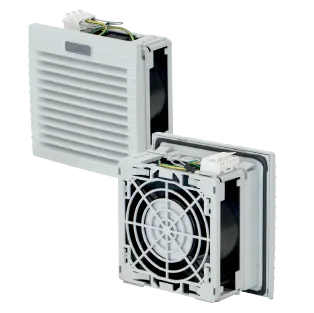
A filter fan draws cooler ambient air into the cabinet through a filter mat, while an outlet filter (exhaust grille) lets warm air leave, normally positioned high on the opposite side. Matching sizes keep the airflow balanced. In our catalog, the Alfa Electric ATV series ranges from 24 m³/h (ATV1100) to 500 m³/h (ATV5400) at 230 V, and the Plastim PTF1500 delivers 100 (140) m³/h with IP54 protection.
Sizing basics
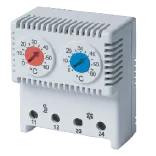
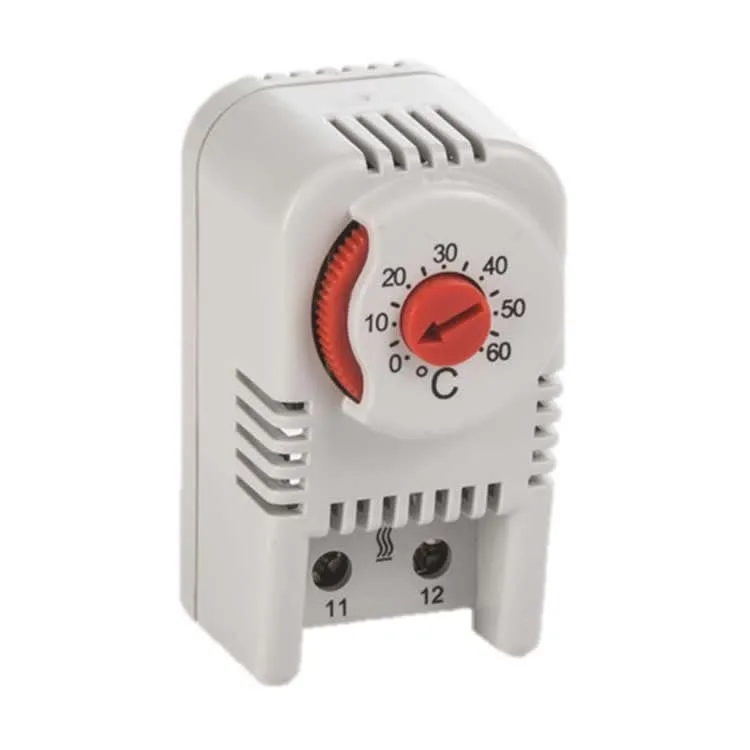
The required airflow depends on the heat loss inside the panel, the allowed temperature rise and the enclosure surface area. Manufacturers provide formulas or calculators – as a rule, calculate the total heat loss from component datasheets, add a margin for dirty filters, and pair the fan with a thermostat (NO contact) so it runs only when needed.
Maintenance
- Replace filter mats regularly – a clogged filter reduces airflow significantly.
- Check that the fan runs when the thermostat calls for cooling.
- Keep the airflow path inside the panel free of cable bundles.
Frequently asked questions
Should the fan blow in or out?
Common practice is to blow filtered air in at the bottom and exhaust at the top through an outlet filter, creating slight positive pressure that helps keep dust out.
Sample article for the prototype — content to be reviewed by the AZGA technical team before publishing.
Need help applying this to your project?