บทความฉบับเต็มของหัวข้อนี้มีเฉพาะภาษาอังกฤษในเวอร์ชันต้นแบบ
Test classes in IEC 61643-11
IEC 61643-11 classifies SPDs by the type of test impulse they are designed for. The class tells you where in the installation the device belongs.
| Type 1 (Class I) | Type 2 (Class II) | Type 3 (Class III) | |
|---|---|---|---|
| Test impulse | 10/350 µs (Iimp) | 8/20 µs (In, Imax) | Combination wave (Uoc) |
| Typical location | Service entrance / main board | Sub-distribution boards | Close to sensitive equipment |
| Protects against | Partial direct lightning current | Induced lightning and switching surges | Residual surges |
When do you need Type 1?
Type 1 (or combined Type 1+2) devices are required where part of a direct lightning current can enter the installation — typically buildings with an external lightning protection system, or supplies fed by overhead lines. They are installed at the origin of the installation, between lightning protection zones LPZ 0 and LPZ 1.
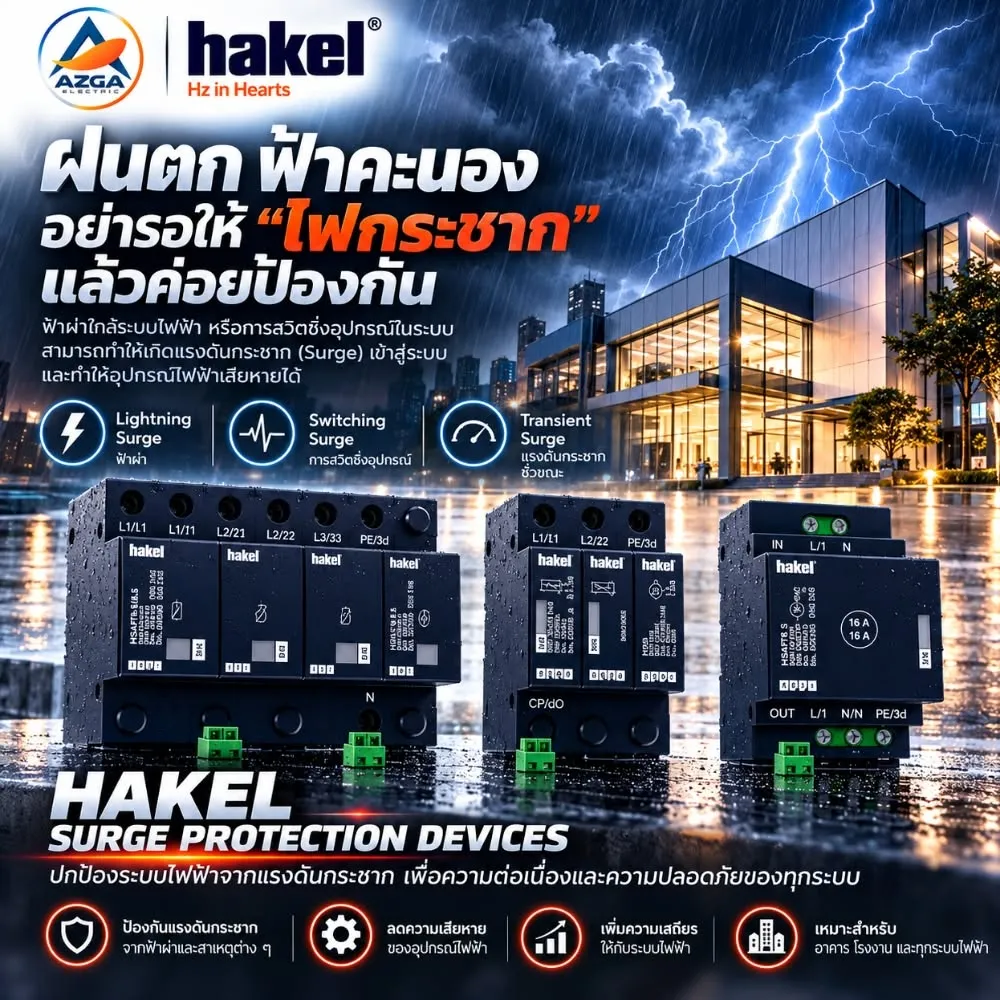
Spark-gap based arresters such as the Hakel HLA50-255 are built for this impulse current duty. Combined T1+T2 arresters such as the HLSA25-275 series cover both duties in one device.
Where Type 2 fits
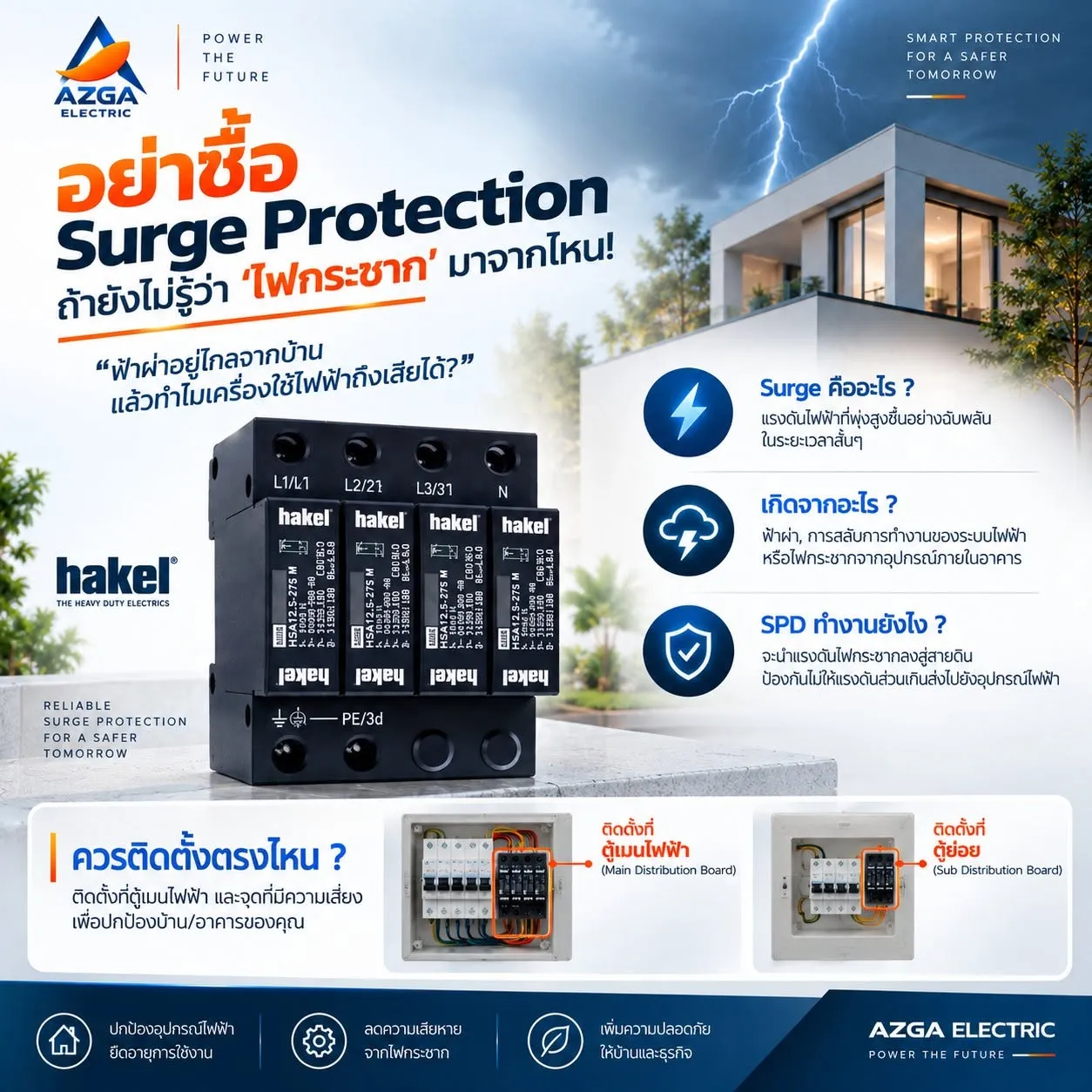
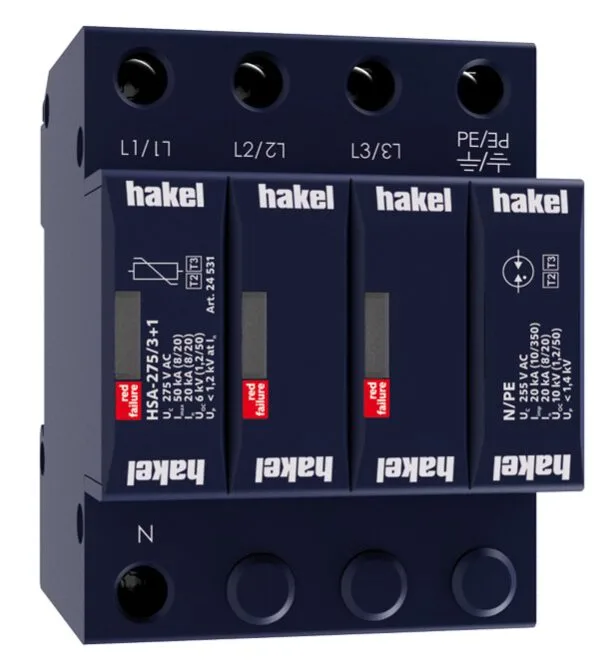
Type 2 SPDs are the workhorse of distribution and control panels. They limit surges that are induced into the network or created by switching, and they are installed in sub-distribution boards and machine panels (LPZ 1 → LPZ 2). Combined Type 2+3 devices such as the Hakel HSA-275 M S family can be used close to the equipment they protect.
Coordination matters
Protection is most effective when devices are coordinated: a Type 1 device takes the bulk of the energy, while downstream Type 2 and Type 3 devices bring the residual voltage down to a level the equipment can tolerate. Follow the manufacturer’s guidance on cable length or decoupling between stages, and always size the back-up fuse according to the datasheet.
คำถามที่พบบ่อย
อาคารที่มีสายล่อฟ้า ติดตั้งเฉพาะ SPD Type 2 ได้หรือไม่?
หากมีระบบป้องกันฟ้าผ่าภายนอก โดยทั่วไปต้องติดตั้ง Type 1 (หรือ Type 1+2) ที่จุดจ่ายไฟเข้าอาคาร ควรตรวจสอบข้อกำหนดและคำแนะนำของผู้ผลิต
บทความตัวอย่างสำหรับเว็บไซต์ต้นแบบ — เนื้อหาจะได้รับการตรวจสอบโดยทีมเทคนิคของ AZGA ก่อนเผยแพร่
ต้องการความช่วยเหลือในการนำไปใช้กับโครงการของคุณ?